
pH electrodes are a basic laboratory supply for use in pH meters. Refer to the descriptions below to order or replace your electrodes.
The Electrode Pair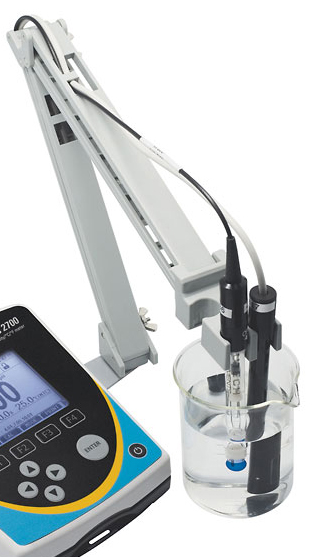
Sensing half-cell electrodes are the measuring portion of the electrode system and contain the pH-sensitive membrane. Reference half-cells electrodes provide the reference potential needed for pH measurement. Most of the electrodes in our catalog are combination electrodes that house both half-cells in a single probe.
Bulb Material and Design
The bulb is constructed of different types of glass, each with different properties.
General-purpose glass: various pH ranges, temperatures to 212ºF (100ºC) prevents Na+ error.
Blue glass: pH 0 to 14, temperatures to 230ºF (110ºC).
The bulb shape can be modified to provide a semi-dome for increased ruggedness, a spear tip for penetration applications, or even a flat surface.
Junction Types
Junctions can be categorized into three distinct types. Sleeve and annular (open) junctions are high-flow, and best in dirty and viscous samples. Ceramic and capillary junctions are medium flow, and ideal for everyday samples and most applications. Wick and fiber junctions are low-flow, and best for use with clean samples.
Glass vs Epoxy Body
Epoxy-body electrodes are impact resistant and are ideal for rough handling but should not be used at higher temperatures or for solvents. (Note: Even though the body of an epoxy electrode is plastic, the bulb will still be glass.) Glass-body electrodes withstand high temperatures, corrosive materials, and solvents.
Sealed vs Refillable
Sealed (also known as gel-filled) electrodes are easier to maintain than refillable liquid filled electrodes. However, they must be replaced when the fill material level is low. Refillable electrodes are long-lasting and provide a faster response.
Single- vs Double-junction
In combination electrodes, the reference junction allows H+ ions to pass freely between reference and sensing half-cells to complete the electrical circuit. A single-junction design has one place where the H+ ions pass between half-cells. The junction is located so that contaminants in your sample can also pass into the reference chamber, leaving the potential for electrode failure due to reference contamination. A double-junction design restricts the reference behind a second junction; making it twice as hard for reference contamination to occur.
View all pH electrodes.
Be the first to comment on "Laboratory Supplies: pH Electrodes Basics"