
Lead, cadmium, and chromium are among many metal contaminants that may be present in the environment—in ground water, wastewater, and soil—and can accumulate in the body and cause health risks. Cadmium, for example, is a toxic metal present in industrial work sites. At specified levels of exposure, cadmium can cause kidney and bone damage.
Because of the dangers they pose, the Environmental Protection Agency (EPA) has set maximum contaminant levels (MCL) for metals. Public water supplies are monitored for these metals regularly. Many manufacturers are required to analyze their wastewater for the presence of these contaminants.
The National Pollutant Discharge Elimination System (NPDES) permit program controls water pollution by regulating the sources that discharge pollutants into US waters. Manufacturers with NPDES permits must detect and quantify specified metals on a regular basis. Many self- monitor to remain consistently in compliance.
What equipment is used to detect metals?
The Process: Metals Digestion
The metal digestion process seeks to maintain analytes in a solution and decompose the solids without loss or contamination. The digestion of metals typically involves acids and heat. Acid digestions require a fume hood for venting toxic fumes.
Historically, the digestion process involved taking a beaker containing the sample and adding acid. The beaker was then placed in a stirring hot plate under a hood for several hours.
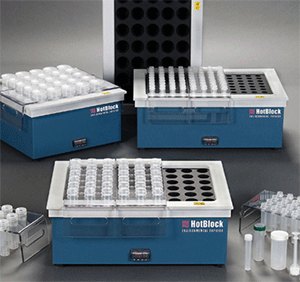
EPA-approved systems have streamlined the metals digestion process, improving productivity and increasing safety. Equipment, such as the HotBlock® System, shown at right, uses disposable digestion cups with accurately marked graduations to eliminate transfer steps and reduce sample contamination. PTFE-coated blocks with individual wells bring samples to temperature quickly and maintain uniform heat distribution for up to 54 samples simultaneously.
For the remaining parts of the process, including Post Digestion Filtration and Metals Analysis, read part two in our next blog.
Be the first to comment on "Analyzing Samples for Metals (Part One)"