
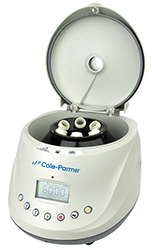
 It’s hard to find a research lab without a centrifuge to process samples. In cellular and molecular biology, centrifugation is used for isolating cells, subcellular organelles, and macromolecules. In pharmaceutical studies and drug discovery, centrifuges are used in bioproduction, vaccine production, and metabolism studies. In food processing, this versatile instrument removes inbound moisture, filters particles, and ensures the quality of products.
Centrifuges separate colloidal particles and simulate gravitational effects to settle materials according to density. For a unit that achieves what you need it to, try these features:
- Anticorrosive material: Carbon fiber is durable and lightweight, and will hold up longer over time than metal or aluminum components.
- Biocontainment rotors: To maintain biosafety and reduce the risk of contamination, biocontainment rotors with click-shut lids keep the samples from spilling inside sealed buckets as they are loaded.
- Glove-friendly: The front panel and rotor exchange don’t snag your lab gloves. Allows users to change rotors with ease. Models with click-shut lids offer one-handed operation.
- Refrigeration: Eliminate any heat damage to samples by keeping the interior cooled with refrigeration.
- Rotor balance protection: Alerts users to imbalances resulting from improperly installed rotors or samples placed unevenly. Once detected, the function will shut the centrifuge down.
- Rotor versatility: Select a swing-out rotor when you want sample tubes to move from vertical to horizontal once the centrifuge speeds up. This type works well for cell culturing applications which leave sediment at the bottom of the tube. Fixed-angle rotors stay intact and typically work faster than swing-out rotors. To perform multiple tasks, choose a centrifuge that accommodates a variety of adapters. Select a model that doesn’t require the use of tools to change out rotors and adapters and is ergonomically sound.
For types of centrifuges, read Part Two of this two-part article. Need help selecting a centrifuge? Call 1-800-323-4340 and talk to one of our product specialists.
Be the first to comment on "Getting the Centrifuge You Need: Part 1"