
Submitted by Gopika Nair, Application Specialist, Cole-Parmer India
A renowned supplier and manufacturer of vegetable seeds sought Cole-Parmer’s assistance in detecting aflatoxin in corn seeds. A recommended spectroscopy technique is used in identifying and detecting aflatoxin.
Increased concern about the possibility of the presence of carcinogenic mold metabolites, particularly aflatoxins, in food and animal feed products arose in late 1975. Around harvest time in recent years, this concern has received increasingly more attention because of the involvement of the US Department of Agriculture, the Food and Drug Administration (FDA), and public awareness of potentially dangerous food contaminants generated by newspaper articles and the Consumers’ Union.
 Aflatoxins are naturally occurring mycotoxins produced by many species of Aspergillus, a fungus. Most mycotoxins are found in grain, usually grown in a drought, although they may contaminate pasture grass and occasionally hay. Most frequently, aflatoxins are found in corn. Because they are carcinogenic to animals and perhaps humans, they are monitored closely in the food supply. Also, they are the most carcinogenic natural compounds known.
The FDA has established an “action level” of 20 ppb for aflatoxins in corn in interstate commerce. This is the level at which federal agencies may take action, including the seizure of corn or prohibition of its sale. Elevators do not accept corn with 20 ppb or more of aflatoxin unless they have a known use for the particular level of aflatoxin. Even one highly contaminated kernel in a 5-lb sample could result in more than 20 ppb aflatoxin. The FDA also has guidelines for using contaminated grain in livestock feed. These guidelines are based on maintaining performance and avoiding disease related to aflatoxin (except for dairy cattle in which prevention of aflatoxin residues in milk is the concern).
Seeking a Visual Inspection
 A renowned India-based supplier and manufacturer of vegetables seeds, with strong research in Hycorn, paddy and vegetables, is presently working on a corn project with the vision of becoming one of the top corn marketing Indian companies.
The manufacturer wanted to detect aflotoxin in corn seeds because they can colonize and contaminate the grain before harvest or during storage. Aflatoxin can cause decay in grains undergoing microbiological deterioration and are harmful for corn and other grains intended for breeding beef cattle, swine, or mature poultry.
The company was looking for a quick preliminary test: a visual inspection for the presence of a greenish gold fluorescence under light at a wavelength of 365nm (nanometers).
The Challenge:
They wanted to conduct both quantitative and qualitative analysis of aflatoxin in corn seeds using a faster technique as compared to the conventional methods available.
The Solution:
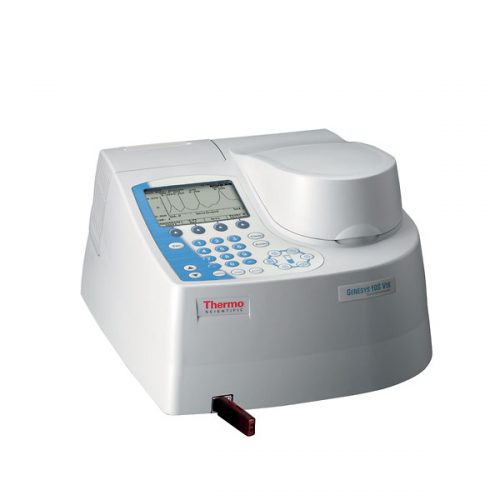 After approaching Cole-Parmer, our technical specialist discussed the application and requirements in detail and recommended the Thermo Scientific Genesys™ 10 S, a UV-Visible Spectrophotometer. With this system, the user can do both quantitative and qualitative analysis using the same technology.
Benefits of the system:
- The system has full USB connectivity and fast, full-range scanning at up to 4,200 nm/min
- Its USB connectivity allows users to interface with a PC or high-quality external printer or simply transfer data and methods
- Quality optics and robust design ensure long life and reliable performance
- Flexible sample handling and versatile software provide high value performance
- It is accurate, reliable and easy-to-use
Result:
The manufacturer appreciated the ability of conducting both the quantitative and qualitative analysis using the same technology.
Be the first to comment on "Detecting Aflatoxin in Corn"