
Double-diaphragm pumps are used in many industries: wastewater, food & beverage, petrochemical, printing, and more. Here’s how they work:
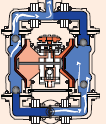 Discharge Stroke—Pressurized air is directed to the left diaphragm, pushing it outward. Liquid is forced from the left outer chamber, through the chamber, an open discharge check valve, and exits the pump at the discharge manifold.
 Suction Stroke—As the left diaphragm is pushed out, a connecting rod pulls the right diaphragm inward, filling the right chamber with fluid. Liquid enters the pump at the suction manifold, moves through an open suction check valve, and fills the chamber.
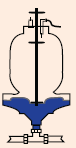 Surge Suppressor—Liquid pressure pushes the diaphragm upward, and a balancing air cushion keeps the diaphragm centered at midstroke. The diaphragm flexes within the mid-range position, absorbing and equalizing discharge pulsation.
Be the first to comment on "How Double-Diaphragm Pumps Work"